Every building moves a little. Concrete shrinks as it cures, wood framing dries, and seasons change the moisture in the soil. The question is whether the movement you are seeing is normal or a sign that the foundation is settling, heaving or failing. Here are the patterns structural engineers pay attention to.
The warning signs
- Stair-step cracks in brick or block. Cracks that zig-zag along mortar joints often indicate differential settlement, where one part of the foundation moves more than another.
- Cracks that grow, shift or leak. A hairline crack that stays the same is often shrinkage. Cracks that widen over time, have one side offset from the other, or let in water deserve a closer look.
- Horizontal cracks in foundation walls. In basement and retaining walls, horizontal cracking or bowing can mean soil pressure is pushing the wall inward.
- Doors and windows that stick. Openings that suddenly bind, will not latch, or show tapered gaps can reflect movement in the structure around them.
- Sloping, bouncy or sagging floors. On slabs, this can point to settlement. On pier-and-beam (crawl space) foundations, it can mean settled piers or damaged beams and joists.
- Gaps at trim, ceilings and chimneys. Separations between walls and ceilings, or a chimney pulling away from the house, are common signs of movement.
- Cracked or heaved slabs. Large cracks in floors or garage slabs, especially with vertical offset, can indicate soil movement below.
- Crawl-space problems. Leaning or cracked piers, shims stacked on piers, rot, or standing water and high humidity under the house.
- Water and erosion around the foundation. Ponding, soil washing away from footings, or downspouts emptying against the house are often the cause behind the other signs.
What usually causes foundation movement
- Poor drainage and roof runoff saturating the soil
- Clay soils that shrink in drought and swell when wet
- Soft, loose or poorly compacted fill
- Erosion and washouts
- Plumbing leaks beneath slabs
- Tree roots drawing moisture from the soil
- Decay of wood piers and framing in damp crawl spaces
- Undersized or deteriorated footings
When to call a structural engineer
Call an engineer if you see several of these signs together, if cracks are getting worse, or if you are buying or selling a property and need an independent opinion. An engineer’s evaluation is independent of any repair sales, which matters when you are deciding what work is really needed.
A typical evaluation includes a site inspection and photo documentation, a look at drainage and grading, measurements of crack patterns and floor levels where appropriate, an opinion on the cause, and a remediation plan or report you can use with contractors, insurers or attorneys.
How foundations are repaired
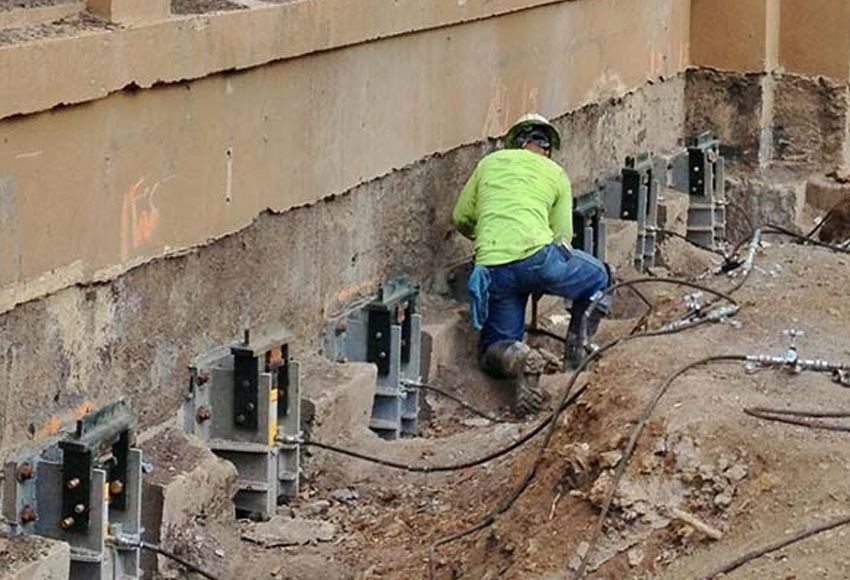
The fix should match the cause. Drainage corrections can stop movement driven by water. Where the soil cannot support the building, steel push piers or helical piers can carry loads down to more competent soil. Crawl-space foundations may need new or supplemental piers and beam supports and replacement of decayed framing. Walls being pushed by soil may need tie-backs or anchors. Cracks in concrete can often be sealed or structurally bonded with epoxy injection once movement is addressed.
Martinez & Associates provides foundation inspections, causation opinions and remediation plans for slab and pier-and-beam foundations, and partners with Ram Jack of the Carolinas on pier and bracket systems.